
The concept of time travel has fascinated humanity for centuries. From H.G. Wells‘ “The Time Machine” to popular culture classics like “Back to the Future,” the idea of traversing time has been a recurring theme in Western science fiction. However, time travel remains a subject of great curiosity and debate, with many questioning its feasibility. In this blog post, we’ll explore different POVs on time travel between Western and Indian cultures while delving into the reality of this intriguing concept.
Cultural Perspective
WESTERN PERSPECTIVE
Western literature and cinema have produced numerous time-travel narratives that capture the imagination of audiences worldwide. These stories often involve intricate machines, paradoxes, and alternate timelines. While they make for compelling tales, they remain firmly rooted in the realm of fiction. Western culture tends to view time travel as a thrilling adventure or a scientific experiment, sparking the imagination of many but leaving unanswered questions about its actual feasibility.
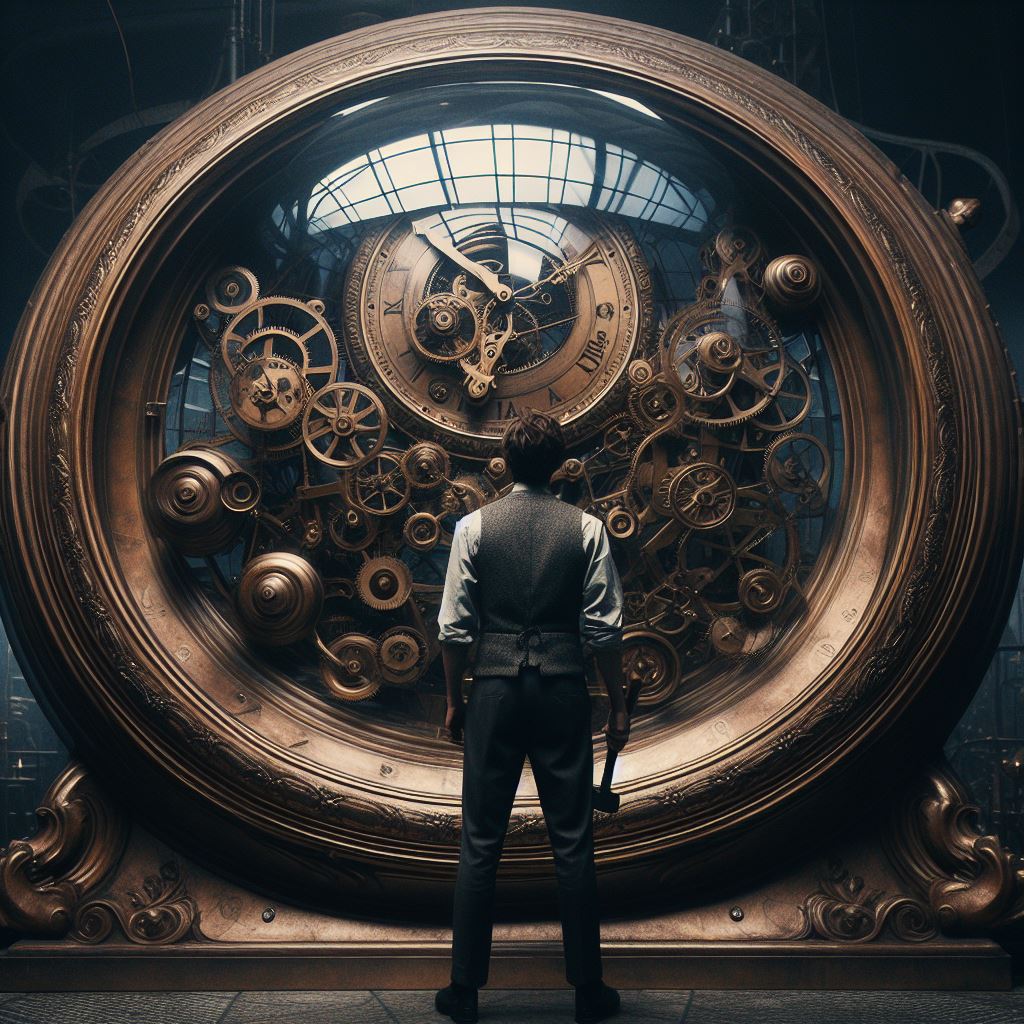

INDIAN PERSPECTIVE
In contrast, Indian culture views time and reality differently. The ancient concept of “Kal” in Indian philosophy encompasses the cyclical nature of time, where past, present, and future are interconnected and constantly repeating. While Indian culture acknowledges the idea of time travel in its mythological stories, it is often more about spiritual and metaphysical journeys than physical movement through time and space.
The Reality
In reality, scientific theories such as Einstein’s theory of relativity suggest that time travel might be possible, although not in the dramatic way depicted in Western fiction. Concepts like time dilation indicate that time can be relative, depending on an observer’s speed and gravitational field. However, creating a time machine, as seen in movies, remains far-fetched and highly speculative. It is not clear whether time travel can ever become a practical reality, and if it does, it is unlikely to resemble the cinematic depictions.
Conclusion
Time travel, a subject that has captivated the minds of people across the world, remains firmly grounded in fiction for now. While Western culture revels in the adventurous and scientific aspects of time travel, Indian culture embraces a more spiritual and metaphysical approach to the concept of time. As we explore the possibilities and limitations of time travel, it’s essential to acknowledge that while our understanding of time and space may evolve, the reality of time travel is still uncertain, and we should continue to be inspired by the imagination of both cultural perspective in our quest for knowledge and exploration.